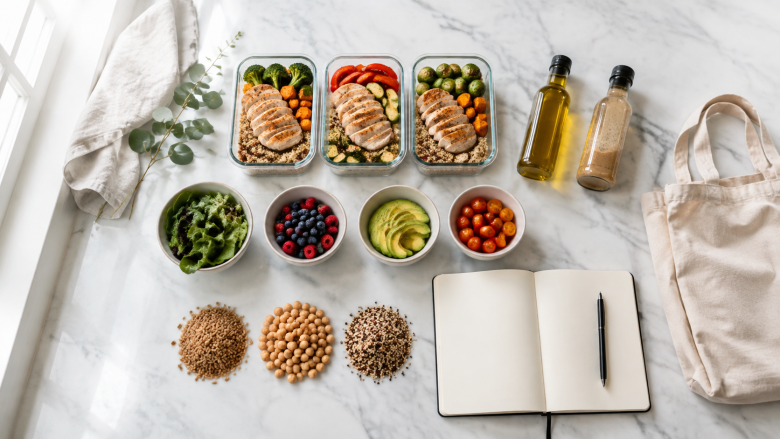
Stop Overthinking Dinner: A Real System for Weekly Meal Planning
Meal planning shouldn't feel like a second job. The problem most people face isn't a lack of recipes-it's decision fatigue. You stare at your fridge, scroll through Pinterest, and end up ordering takeout again. I've been there. After years of trial and error, I landed on a repeatable system that cuts planning time to 15 minutes and actually reduces food waste. Here's how to make a weekly meal plan that sticks: use a structure-first approach with two simple frameworks-the 3-3-3 rule for meals and the 5-4-3-2-1 rule for grocery shopping.
This isn't about rigid meal prep for the whole week. It's about building a flexible template you can adapt to your schedule, dietary goals, and household size. By the end of this guide, you'll have a repeatable process that works whether you're cooking for one or a family of five.
Why Most Meal Plans Fail (and What to Do Instead)
When I first tried meal planning, I made the mistake of choosing seven completely different recipes. I spent hours on Sunday cooking dishes that no one wanted to eat by Wednesday. leftovers piled up, and I threw away at least a quarter of the produce. The thing nobody tells you about meal planning is that variety is overrated. You don't need seven different dinners. You need a system that maximizes reuse and minimizes mental load.
Most beginners focus on the wrong thing: they look for recipes first. Instead, start with a repeatable structure. The 3-3-3 rule is exactly that-a framework that gives you enough variety without overwhelming your week.
What Is the 3-3-3 Rule for Meals?
The 3-3-3 rule is a simple guideline for building a weekly dinner plan: choose 3 proteins, 3 starches, and 3 vegetables. Then mix and match them across the week to create different meals. For example, you might pick chicken breast, ground beef, and tofu as your proteins; rice, potatoes, and pasta as your starches; and broccoli, bell peppers, and spinach as your vegetables. From those nine ingredients, you can make at least six distinct dinners-chicken and rice with broccoli, beef stir-fry with peppers and rice, tofu pasta with spinach, and so on.
This structure works because it reduces the number of decisions you need to make. You're not hunting for a new recipe every night. You're combining from a limited set of ingredients. It also makes grocery shopping dead simple: you only buy what's on your list. To answer the question "How to structure a weekly meal plan?"-the 3-3-3 rule gives you a repeatable template. You can also use it for lunches and breakfasts, but I recommend starting with dinners only.
How to Apply the 3-3-3 Rule to Your Household
If you're cooking for one or two, the 3-3-3 rule works perfectly. For larger families, you might scale up to 4 proteins, 4 starches, and 4 vegetables-but keep the ratios balanced. The key is to avoid overbuying. When I cook for myself, I use the 3-3-3 rule and plan for 5 dinners, leaving two nights for leftovers or eating out. That's another tip: don't plan for every single meal. Leave buffer days. Your schedule will thank you.
Most people don't realize that a 7-day meal plan doesn't have to mean 7 different dinners. A 7-day meal plan can include 3-4 recipes repeated in different combinations. For example, Monday: chicken and rice with broccoli. Tuesday: leftover chicken and rice turned into a soup with spinach. Wednesday: beef tacos with peppers. Thursday: leftover beef tacos turned into a salad. See the pattern? You're not cooking from scratch every night.
For a deeper dive on how to keep energy levels steady with lighter meals, check out our Weekly Light Meal Plan for Steady Energy-it uses a similar modular approach but focuses on light, nutrient-dense options.
The 5-4-3-2-1 Rule for Groceries: Quantify Your Shopping List
Once you have your 3-3-3 meal structure, you need to know how much to buy. The 5-4-3-2-1 rule is a grocery shopping guideline that ensures you have enough fresh produce, protein, and staples to last the week without waste. Here's the breakdown:
- 5 vegetables - Choose 5 different vegetables (or 5 total servings per person per day? No, it's 5 types of vegetables for the week). For example: broccoli, bell peppers, spinach, carrots, onions. Onions count as a vegetable here.
- 4 fruits - 4 different fruits (or types) for snacks and breakfast. Apples, bananas, oranges, berries.
- 3 proteins - 3 protein sources (matches the 3-3-3 rule). Chicken, beef, tofu.
- 2 sauces/condiments - 2 versatile sauces or dressings that can be used across multiple meals. Soy sauce, olive oil, vinaigrette, pesto. These add flavor without extra work.
- 1 grain - 1 main grain or starch (rice, pasta, quinoa, potatoes). You can buy multiple types but stick to one primary grain to keep it simple.
This rule is a starting point, not a rigid formula. If you're cooking for a family of four, you'll buy larger quantities of each item. But the variety stays the same. The 5-4-3-2-1 rule prevents you from buying 10 different vegetables that will rot in the drawer. It also forces you to be intentional about sauces-most people buy too many condiments they never use. I've found that a good soy sauce and a lemon-herb vinaigrette cover 80% of my weeknight meals.
When I first used the 5-4-3-2-1 rule, I was shocked at how much less food I threw away. According to the EPA's Food Recovery Hierarchy, source reduction is the most effective way to reduce food waste. Planning with precise quantities is exactly that.
How to Create a 7-Day Meal Plan Using Both Frameworks
Now let's put it all together. Here's a step-by-step process to create a 7-day meal plan that works for busy people.
Step 1: Check Your Calendar and Schedule
Before you pick any recipes, look at your week. Which nights are you likely to be home late? Which nights can you cook for 30 minutes? On busy nights, plan for meals that are quick or rely on leftovers. On slower nights, you can cook something that takes longer. This is the most underrated step. I used to plan for elaborate meals on Monday, then realize I had a late meeting. Now I always mark "easy" on my calendar for those nights.
Step 2: Choose Your 3-3-3 Ingredients
Pick 3 proteins, 3 starches, and 3 vegetables. Write them down. For example: chicken thighs, canned black beans, firm tofu; brown rice, sweet potatoes, whole wheat pasta; broccoli, zucchini, kale. These are your building blocks.
Step 3: Map Out 5-6 Dinners
Using those ingredients, plan 5-6 dinners (leave 1-2 nights free for leftovers or eating out). Here's a sample week:
- Monday: Chicken thighs with roasted sweet potatoes and broccoli. (Cook extra chicken and sweet potatoes for Tuesday.)
- Tuesday: Shredded chicken and black bean tacos with zucchini slaw.
- Wednesday: Tofu stir-fry with broccoli and brown rice. (Cook extra rice.)
- Thursday: Leftover chicken and rice turned into a soup with kale.
- Friday: Pasta with kale and black beans, topped with leftover stir-fry sauce.
You see how the same ingredients get reused in different forms. That's the magic of the 3-3-3 rule. You're not cooking new meals from scratch every night; you're repurposing cooked components.
Step 4: Make Your Grocery List Using the 5-4-3-2-1 Rule
Now translate your 3-3-3 ingredients into the 5-4-3-2-1 quantities. For a single person, you might buy: 1 head of broccoli, 2 zucchini, 1 bag of spinach, 1 bunch of kale, 1 onion (5 veggies); 2 apples, 2 bananas, 1 bag of frozen berries, 1 orange (4 fruits); 1 lb chicken thighs, 1 can black beans, 1 block tofu (3 proteins); soy sauce, vinaigrette (2 sauces); 1 bag of brown rice (1 grain). That's a manageable list. No wasted items.
If you're cooking for a family, scale up portions. For example, 2 lbs of chicken thighs, 2 cans of beans, etc. But the variety stays the same. This is where many meal plans go wrong-they buy 10 different vegetables and only use three. Stick to the 5-4-3-2-1 rule to keep your fridge from becoming a science experiment.
Step 5: Prepare What You Can (But Don't Overdo It)
I'm not a fan of spending an entire Sunday meal prepping every single meal. Instead, I do "component prep." Chop vegetables, cook a batch of rice, marinate the chicken, and maybe cook one protein. That takes 45 minutes max. Then during the week, I can assemble meals in 15-20 minutes. The mistake people make is trying to cook everything in advance. Most food doesn't taste good after 5 days in the fridge. Cook only what you'll eat in the first 2-3 days, and prep the rest.
Adapting the Plan for Dietary Goals and Household Size
One of the common questions I get is: "Can I use the 3-3-3 rule if I'm eating low-carb or plant-based?" Absolutely. The framework is flexible. Just swap the categories. For low-carb, your starches become non-starchy vegetables or cauliflower rice. For plant-based, your proteins are beans, lentils, tofu, tempeh. The structure remains the same. You could even use the 3-3-3 rule for a paleo or keto diet-just adjust the starch category to include sweet potatoes and other allowed carbs.
Portioning for household size is another critical factor. If you're cooking for one, you might halve the recipes. If you're cooking for four, double or triple. But don't double the variety-just the quantity. The 5-4-3-2-1 rule scales linearly. For a family of four, buy 4 lbs of chicken, 4 cans of beans, 4 blocks of tofu? No, that's too much. Scale the proteins: 2 lbs of chicken, 2 cans of beans, 1 lb of tofu. That's enough for 4 people for 6 dinners, assuming each person eats about 4-6 oz of protein per meal. The exact amounts depend on your family's appetite. I use a simple rule: one pound of protein yields about 4 servings. So for 4 people, 6 dinners, I need about 1.5 lbs of protein per dinner? No, that's too much. Let's calculate: 4 people x 6 dinners = 24 servings. 24 servings / 4 servings per pound = 6 lbs of total protein. Across 3 protein sources, that's about 2 lbs each. That's a lot. But you don't need to cook all 6 dinners-some are leftovers. Most families cook 3-4 dinners and eat leftovers the other nights. So you might need 3-4 lbs total protein. The point is: adjust portions based on how many meals you actually cook from scratch.
For a lighter approach that focuses on steady energy, see our 5-Day Light Meal Plan for Wellness-it uses similar principles but with a shorter window and more emphasis on fresh produce.
Common Pitfalls and How to Avoid Them
Even with a great system, things can go wrong. Here are the most common mistakes I've seen (and made).
Pitfall 1: Planning Too Many Meals
I once planned 7 dinners, all different, and ended up eating out three times. The plan fell apart. Now I only plan 5 dinners and leave two nights for leftovers or spontaneous meals. That's a buffer. If you're an over-planner, start with 4 dinners a week. You can always add more later.
Pitfall 2: Ignoring Your Actual Schedule
Don't plan a complicated stir-fry on a night when you have a 6 PM meeting. Be honest about your energy levels. One trick: use a color-coded system. Green for 15-minute meals, yellow for 30-minute meals, red for 45+ minutes. Then assign colors to your week. This is a simple way to structure a weekly meal plan without overcomplicating it.
Pitfall 3: Buying Too Much Fresh Produce
The 5-4-3-2-1 rule helps with this, but you still need to use your vegetables in order of perishability. Use delicate greens like spinach and kale early in the week, and hardier vegetables like broccoli and carrots later. Also, consider frozen vegetables for the end of the week. They're just as nutritious and don't go bad. I keep frozen peas, corn, and spinach on hand for backup.
Pitfall 4: Not Accounting for Leftovers
Leftovers are your friend, but only if you plan for them. When you cook a meal, intentionally cook extra so you can repurpose it. For example, cook extra chicken on Monday for Tuesday's tacos. Cook extra rice on Wednesday for Friday's stir-fry. This is the "cook once, eat twice" principle. It's the most efficient way to reduce food waste and save time.
Advanced Tips: Using the Frameworks for Nutrition Goals
If you have specific health goals-like increasing protein intake or reducing sodium-you can layer those onto the 3-3-3 and 5-4-3-2-1 rules. For example, if you want to eat more protein, choose 4 proteins instead of 3 (4-3-3-2-1?). Or if you're watching carbs, choose 2 starches and 4 vegetables. The framework is modular. You can also adjust the sauces: choose low-sodium soy sauce, no-sugar-added vinaigrette.
Another advanced technique: use the 3-3-3 rule for a week and then rotate the proteins and vegetables the next week. This prevents boredom while still maintaining structure. For example, week 1: chicken, beef, tofu; week 2: salmon, pork, lentils. The starches and vegetables can change too. Over time, you'll build a library of go-to ingredient combinations.
For a deeper dive into hydration and how it supports energy during your meal planning, see our 7-Day Hydration Boost Plan for Energy-it's a complementary routine that pairs well with a consistent meal plan.
The Bottom Line: Start Small, Stay Consistent
Meal planning doesn't have to be perfect. The goal is to reduce decision fatigue, not add more stress. Start with the 3-3-3 rule for your dinners and the 5-4-3-2-1 rule for your grocery list. Plan for 5 dinners, leave 2 nights free, and prep components rather than full meals. Adjust for your household size and dietary needs. Most importantly, give yourself grace. If you order pizza on Thursday, that's okay. The system works best when it's flexible, not rigid.
Within two weeks, you'll notice a difference: fewer trips to the store, less food waste, and more time in your evenings. That's the real win. So grab a piece of paper, write down your 3 proteins, 3 starches, and 3 vegetables, and start building your weekly meal plan tonight. Your future self will thank you.