Last Tuesday, after a day of back-to-back calls and a kitchen that looked like a tornado hit, I sank into my chair feeling that familiar tightness in my chest. That’s when I remembered the simple act of breathing—not the deep, forced kind, but a gentle noticing that softened everything. In the minutes that followed, the room felt a little less chaotic, my shoulders eased, and a quiet steadiness crept in. It wasn’t about fixing the day or pushing through; it was just a pause that let the restlessness settle. If you’re juggling a full plate like I often am, this might be the small anchor you’ve been missing, something to return to when life pulls you in every direction.
I started paying attention to my breath during those overwhelmed moments because the usual rushing around only made me more tired. One afternoon, while folding laundry with my mind racing about dinner plans and emails, I simply stopped and felt the air moving in and out. It shifted me from that edgy, restless feeling to something calmer, without any effort or special tools. This quiet noticing became my go-to, different from those intense breathing exercises that sometimes left me more tense.
The Quiet Shift from Rushed Days to Breath Awareness
Those rushed days used to leave me scattered, like trying to catch sand in my hands. I remember driving home after picking up groceries, heart pounding from a tight parking spot and a long line at checkout. Instead of gripping the wheel harder, I let my attention drift to the soft rhythm of my breath. It wasn’t dramatic; just a subtle easing that made the traffic feel less urgent.
What surprised me was how this awareness crept into other parts of my day. During a family call where everyone talked over each other, I tuned into my breathing quietly. The usual irritation faded into a steady presence, allowing me to listen without jumping in. It’s this gentle shift—from being pulled by the chaos to anchoring in breath—that keeps me grounded amid the everyday whirl.
Unlike power breathing techniques that demand control, this is more like befriending what’s already there. No counting or holding; just noticing the natural flow. Over time, I’ve seen how it turns restless energy into calm without forcing a change. It’s become a thread through my days, simple and always available.
Finding Your Natural Rhythm Without Any Pressure
Your natural breath rhythm is unique, like a personal whisper amid the noise. I first tuned into mine one morning over coffee, sitting by the window with steam rising from my mug. No agenda, just letting my eyes soften and feeling the air enter softly through my nose. It revealed a pace I hadn’t noticed—sometimes quick when hurried, slower when at ease.
Start wherever you are: stand at the sink rinsing dishes or pause mid-walk with the dog. Close your eyes if it helps, and sense the gentle in-and-out without altering it. I found my baseline breath was shallower in the afternoons, tired from meetings, but noticing it brought a touch of steadiness right away. There’s no right or wrong here; it’s about familiarity, like recognizing a friend’s voice in a crowd.
Once aware, small observations arise naturally. Does it quicken before a tough email? Does it deepen after a laugh? These moments build a quiet knowing. Pairing this with a daily morning plan for balanced wellness has made my starts feel less frantic, blending breath awareness seamlessly into the routine.
Let go of pressure to perfect it. If your mind drifts to the grocery list, that’s fine—return softly. This tuning fosters a rhythm that supports you, easing you from scattered to centered over time. It’s a practice that grows without strain.
A Soft Breath Flow I Use on Restless Nights
On restless nights when worries about tomorrow keep me tossing, I’ve turned to a soft breath flow that feels like a warm blanket. Last week, after a late dinner with friends that ran long, I lay in bed with thoughts swirling. Instead of scrolling my phone, I guided myself through these simple steps. It quieted the mental chatter, leading to deeper rest without forcing sleep.
This flow isn’t rigid; it’s adaptable to how your body feels. I often do it propped on pillows, sometimes with a hand on my heart for extra comfort. What draws me back is how it mirrors my natural exhale, making it effortless. Over evenings like these, it has woven into my unwind, especially when combined with an evening wind-down routine for better rest.
Here’s the flow I return to, broken into gentle steps:
- Step 1: Choose a quiet spot and sit or lie as feels easy – Let your back rest against something soft; no need to straighten up or strain. Allow your arms to relax by your sides, palms open. This settling invites your body to soften naturally.
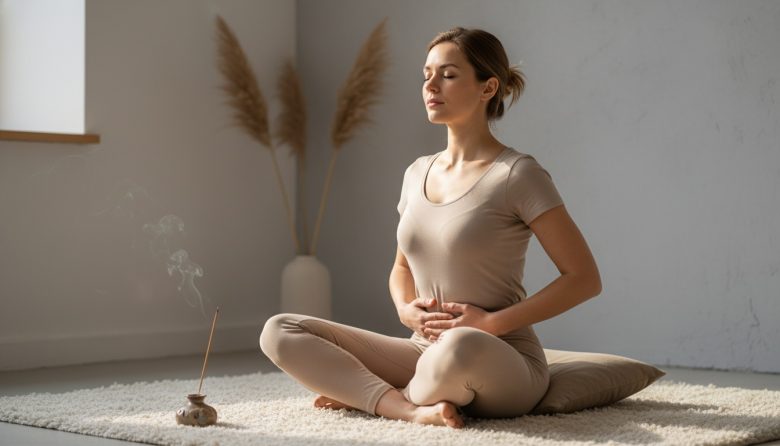
- Step 2: Notice the air moving in and out softly – Feel it brush your nostrils or chest without changing it. If helpful, rest a hand on your belly to sense the subtle rise and fall. Stay here for a breath or two, just observing.
- Step 3: Lengthen the out-breath just a touch – Let the exhale linger like a quiet sigh, perhaps twice as long as the inhale. Keep it gentle, no forcing. This small extension often brings a wave of calm on its own.
- Step 4: Repeat for 5 breaths, then pause – After the cycle, simply rest in the stillness. If restlessness returns, begin again lightly. Let it fade when ready, carrying the steadiness into sleep.
After practicing, I often feel my limbs heavy and mind quieter. It’s become a reliable evening friend, especially on nights when the day lingers too long.
What Helped Me / What Might Help You
A few anchors made this practice stick for me without it feeling like another chore. My favorite reading chair became a breath haven, its cushions cradling me during afternoon lulls. Pairing it with a warm drink, like those from how to make simple herbal infusions for calm, added a layer of coziness that encouraged return visits.
Timing mattered too—I noticed evenings worked best when tired, but short daytime pauses during chores prevented buildup. A soft timer on my phone, set for three minutes, removed guesswork without pressure. It helped when I whispered a kind word to myself afterward, like “that was enough,” easing any sense of shortfall.
Journaling loosely helped track shifts: one note said “less edge before bed.” Small cues, like a scarf draped over my chair, signaled breath time amid clutter. These tweaks turned noticing into habit, steadying my days gently.
Lighting played a role; dimming lamps created a softer space. Consistency came from grace, not grit—missing a day just meant picking up tomorrow. What might resonate for you could be similar quiet supports, tailored to your flow.
Breathing Through Those Unexpected Tense Moments
Unexpected tension hits like a sudden storm—stuck in traffic, I once felt my jaw clench amid honking cars. Tuning into breath there shifted focus from frustration to the air’s rhythm, making the delay bearable. It wasn’t about ignoring the delay but meeting it with less grip.
At family dinners, when conversations turn heated, I’ve paused mid-bite to notice my inhale. This tiny act diffused my urge to interrupt, fostering calmer exchanges. The mindset eased from reactive to present, letting words land softer.
During work hiccups, like a delayed reply causing worry, breath awareness reminds me tension passes. One call with a curt client softened when I breathed through it quietly. These moments build resilience, turning flares into fades without big shifts.
A subtle mindset: breath as an ally, not a fix. It invites space amid the press, steadying without fanfare. Over time, these instances string into a calmer thread through daily ups and downs.
Gentle Experiment: 5 Days of One Evening Pause
For the next five days, try one three-minute evening pause before bed. Sit or lie comfortably, follow the soft breath flow once, then rest. Note loosely how you feel after—perhaps from tired to steady, or just quieter thoughts.
No strict tracking; a word or two in your phone notes suffices. If it fits, weave it into your unwind. This small experiment reveals what gentle breath can offer your nights.
What small moment today could invite a breath pause? Try it once this evening and notice what shifts, without any expectations.
FAQ
Do I need to sit perfectly straight to breathe gently?
No, comfort comes first—slouch on the couch, lean against pillows, or even stand by the window if that suits. The goal is ease, so your body relaxes into the breath naturally. Forcing posture can add tension, which we’re gently moving away from here.
What if my mind wanders during the practice?
Mind wandering is completely normal; it’s how thoughts work, especially when starting out. Meet it with kindness, like nodding to an old friend, then guide back to the breath’s flow softly. Over time, the pull-back becomes quicker and less bothersome.
How long should I do this each day?
Begin with three to five minutes, letting it extend if it feels right. Listen to your body—some days it’s a quick pause, others a longer settle. The beauty lies in its flexibility, growing as it supports you.
Can I do this lying down?
Yes, lying down works wonderfully, particularly near bedtime when it eases into sleep. Support your head and knees for comfort, allowing full release. Many find it their preferred way for deeper unwinding.
Is gentle breathing the same as meditation?
It’s a simpler doorway, focusing just on breath without added structure or focus objects. While meditation might build layers, this stays light and accessible for calm in snippets. Think of it as a gentle companion to fuller practices if you explore them.