I remember the first time I unrolled a mat in my living room, the afternoon light filtering through the curtains, feeling that quiet pull toward something softer than my usual rush. It wasn’t about perfect poses or long sessions—just a few gentle movements that left me steadier by evening. If you’re dipping a toe into yoga at home, this guide is for those stolen moments amid busy days.
Carving Out a Quiet Spot Amid the Everyday Chaos
Finding space in a full home doesn’t need a big overhaul. I started with a corner by the window where the rug was already soft. A yoga mat, or even a thick towel, creates that dedicated feel without extra clutter.
Soft lighting helps too—dim a lamp or let natural light fade in. I draped a light scarf over my side table for a cozy glow. Folded blankets or cushions become props that support without buying more.
One weekend, I shifted a chair aside and added a plant nearby. That small nook invited me back each afternoon. It turned chaos into a pause, reminding me calm lives in the ordinary.
Keep it simple: clear just enough floor for your mat. No need for fancy altars. Your spot evolves as you do, growing kinder with use.
Starting with Breath to Quiet the Inner Chatter
Before any pose, breath grounds everything. I turn to a simple 4-4-4 rhythm: inhale for four counts, hold for four, exhale for four. It feels like a steady hand on a restless mind.
Sit comfortably, hands on knees, eyes soft or closed. Notice the rise and fall without forcing. On busy mornings, this took just two minutes and eased the day’s edge.
I found my shoulders dropping, chatter fading into rhythm. Try it standing if sitting feels stiff. Breath leads, body follows naturally.
Over time, it became my anchor. Even midway through emails, a few rounds brought me back. It’s the quiet start that makes movement kind.
A Flow of Poses That Unwinds Without Effort
These poses link into a gentle 10-minute flow, perfect for beginners. No rushing—let each one linger where it feels right. Breath guides the transitions, keeping it all light.
Table decision: No—beginner yoga flows sequentially, better as guided steps than comparison.
Chosen structured block: steps
- Child’s Pose (2 minutes): Kneel on your mat, big toes touching, knees apart. Fold forward, arms extended or alongside—let your back soften, forehead rest gently on the floor or a blanket. Breathe deeply, feeling the earth hold you.
- Cat-Cow on All Fours (2 minutes): Come to hands and knees, wrists under shoulders. Inhale to arch your back, lifting tailbone and head (Cow). Exhale to round the spine, tucking chin (Cat). Move with breath, like a slow wave through your body.
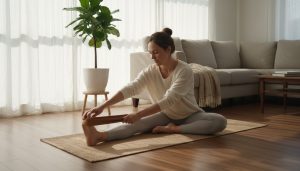
- Seated Forward Fold (3 minutes): Sit with legs extended, feet flexed. Hinge at hips, reaching forward lightly—no strain, just fold where you land. Breathe into hamstrings or back, softening with each exhale.
- Legs-Up-the-Wall (3 minutes): Scoot to a wall, lie back, legs up vertically. Arms rest by sides, palms up. Close eyes, let gravity pull calm into your legs and heart.
Flow back through if time allows, or rest in the last pose. I end here most days, feeling the unwind settle. Pause, adjust—your body knows.
This sequence touches back, hips, legs without overwhelm. It fits evenings when energy dips low. Repeat as feels good, no clock-watching.
What Helped Me, What Might Help You
Short sessions after dinner shifted my tension without adding to my plate. I noticed evenings felt less wired, sleep came easier. Cushions under knees made Child’s Pose a true rest.
Pairing yoga with a small snack kept me steady—learning how to choose nourishing snacks for energy meant nuts or fruit beforehand. It fueled without heaviness. Mornings, I linked it to coffee, turning routine into ritual.
For busy days, cushions or walls as props were game-changers. A friend shared how her rolled towel supported wrists in Cat-Cow. These tweaks make home practice forgiving.
I wove in a gentle 7-day stretching routine for flexibility on off days. It complemented without pressure. What might fit your rhythm?
Tracking evenings in a notebook showed patterns—restless nights faded. Small wins built quiet trust. Try noting one feeling post-flow.
Listening to Your Body’s Whispers, Not Pushing
Your body speaks softly—tight hips might ask for wider knees in Child’s. Shoulders tense? Let arms drape instead of reach. Modifications keep it kind.
In Seated Fold, bend knees generously or loop a scarf around feet. Legs-Up-the-Wall with bent knees eases lower back. These honor where you are today.
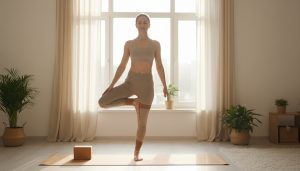
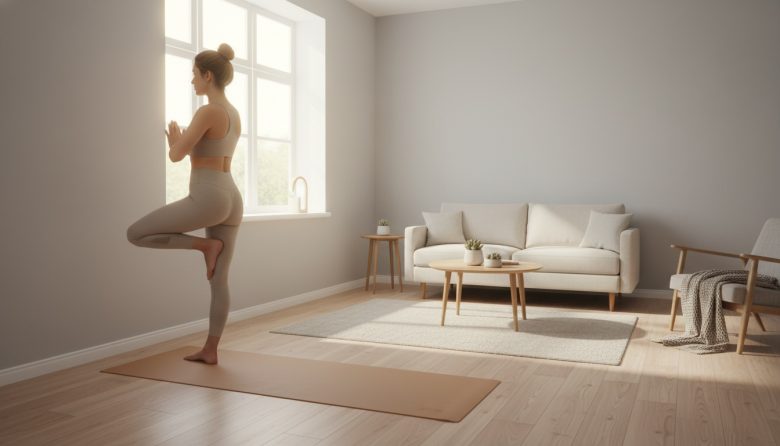
Once, my Tree Pose wobbled into laughter—a reminder not to grip. Tired muscles whisper to shorten time, not strain through. Rest is the pose too.
Signs to ease: breath shortens or mind races. Step back, breathe. I learned this after pushing once, feeling off for days.
Daily life shifts mood—hormones, sleep affect flexibility. Meet it with curiosity. Over weeks, whispers turn to steady knowing.
A Gentle Experiment: One Mat Moment a Day
For five days, try the 10-minute flow above—perhaps mornings with coffee steaming nearby. Keep a loose note: how do shoulders feel by noon? Evenings lighter?
Unroll in your spot, no perfection. If kids interrupt, resume later. It’s the showing up that softens edges.
I did this during a hectic week; by day three, breath came deeper naturally. Small shifts appeared: less scrolling, more presence. Yours might surprise.
After five days, reflect—what called you back? Adjust for week two, maybe add breath first. Gentle builds lasting calm.
Five Questions from Fellow Beginners
Do I need a yoga mat to start?
Not at all—a towel, carpet remnant, or even a blanket folded thick works beautifully for your first tries. The key is a surface that feels supportive under knees and hands, preventing slips without adding expense. I started on a bath mat; it held up until I craved more cushion.
Comfort trumps gear every time. Test spots in your home to find what invites you back. Over time, a mat might call, but beginnings thrive on what’s here.
How often should I practice light yoga?
Even 10 minutes a few times a week weaves in steady calm without tipping into overwhelm. Listen to your weeks—three flows might suit Mondays, Wednesdays, Sundays. I aimed for consistency over daily, finding rest days refreshed me.
As habit grows, it might nudge toward more, but no rush. Track how energy responds; some weeks call for pauses. It’s your rhythm that matters.
What if I’m not flexible?
Flexibility unfolds gently over time; start with bent knees, props under sits, or shorter holds. No one begins bendy—it’s the consistent softening that shifts things. My hamstrings laughed at first Folds, but breath won them over slowly.
Use walls, chairs for support in balances. Celebrate micro-reaches. Bodies warm to kindness, not force.
Can I do this with kids around?
Absolutely—short bursts between playtime work wonders, and they might join with giggles. Set your mat during nap or quiet toy time; five minutes counts. My niece mimicked Cat-Cow, turning practice into shared joy.
Interruptions build resilience—pause, resume. It models calm for them too. Family flows emerge naturally from there.
Is light yoga okay for back discomfort?
Gentle moves like Cat-Cow often soothe mild achy days, but ease in slowly and chat with a doctor if persistent. Skip deep folds if they tug; favor Legs-Up-the-Wall for relief. I found it eased desk-hunch after checking basics felt right.
Watch for sharp signals—stop and rest. Pair with walks or how to prep balanced meals quickly for overall ease. Professional eyes ensure safety first.
What’s one breath or pose calling to you today? Unroll that mat for just a minute and see.